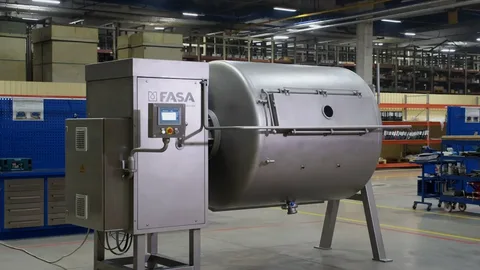
Butter Churn for Mass Production from FASA.lt: Equipment, Features, and Expertise
You want reliable equipment that scales butter production without compromising tradition. FASA AB has made processing machines since 1959, and their batch butter churns handle large volumes of cream and produce consistent butter for commercial plants. If you need a churn that can process up to 1,200 liters of cream per batch and yield hundreds of kilograms of butter with stainless‑steel construction and simple cleaning, FASA’s machines meet that need.
This article will show what makes FASA churns fit for mass production, the parts and support that keep a line running, and how their global reach helps you source service and spare parts where you operate.
Key Features of FASA’s Butter Churns
You get high batch output, stainless-steel sanitation, and built-in safety and durability features. Each design choice targets steady production, easier cleaning, and long service life for packaging equipment lines.
Batch Capacity and Efficiency
FASA churns handle large batches up to 3,000 liters of drum volume and process about 1,200 liters of cream per batch. That capacity translates to up to roughly 600 kg of butter per batch, which helps you scale runs without frequent changeovers.
The machines accept cream with fat content in the 35–42% range, so you can use standard ripened cream blends. A central single-lever cover closure lets you switch between churning and dry kneading positions quickly, reducing idle time between stages.
Drive systems include a gear motor and a mechanical clutch. Those parts give controlled agitation and reliable torque during separation and working, which improves yield consistency and reduces batch loss.
Material Quality and Hygiene Standards
FASA builds churn drums and key contact parts from stainless steel. Surfaces are finished—sandblasted inside and glass-blasted outside—to limit surface defects and make residue removal easier.
The cover uses a bacteriologically safe rubber seal and a sight glass for visual checks without opening the vessel. These choices cut contamination risk and let you monitor phase changes during churning.
Cleaning is manual by design, so you should plan routines and access points accordingly. Drain valves and large rectangular openings with covers provide access for thorough cleaning and inspection, which helps you meet hygiene and packaging equipment requirements.
Safety and Durability Enhancements
The churn includes a frame-mounted gearbox with cladding to shield moving parts. That reduces maintenance hazards and protects the drive train from spillage and wear.
Mechanical features—such as the special clutch and robust gear-motor—offer overload protection and smoother starts. The single-lever central closure locks the lid securely during operation to prevent accidental opening.
You also get sight glass and accessible drain valves to limit unsafe interventions during runs. These elements lower operator exposure and support safer integration with downstream butter homogenizer and packaging equipment lines.
Supporting Equipment for Mass Butter Production
You need equipment that keeps product quality, speed, and hygiene in line with large-scale output. Key items include devices for texture control, portioning, and final packaging that integrate with FASA churns and continuous lines.
Butter Homogenizer Integration
A butter homogenizer refines fat globule size and improves spreadability. You should place it after churning and before working/kneading stations to control texture and moisture binding. This helps produce consistent blocks and reduces graininess.
Match homogenizer capacity to your churn output. For example, if your churn handles up to 3,000 L of cream per batch or a continuous line processes thousands of liters per hour, choose a homogenizer with equal or greater throughput to avoid bottlenecks. Use stainless steel sanitary piping and tri‑clamp fittings for easy cleaning.
Plan for CIP (clean‑in‑place) compatibility and sanitary valves. Monitor pressure, temperature, and shear settings to tune butter firmness. Keep documentation of settings that work with your cream fat content (35–42%) so you can reproduce results.
Butter Block Cutting Machines
Cutting machines turn chilled butter into uniform blocks or sticks quickly and with low waste. You should select models that match your desired block sizes and packaging format—e.g., 250 g, 500 g, or commercial bricks.
Choose machines with adjustable blades and servo drives for accurate lengths and clean cuts. Look for features like frozen butter handling, conveyor synchronization with packing lines, and minimal knife deflection to prevent ragged edges. Safety guards and easy blade change systems reduce downtime.
Consider throughput ratings that align with your churn and working station outputs. Integrate with weighing and rejection systems to ensure each block meets weight tolerances. Stainless steel construction and CIP‑friendly surfaces simplify sanitation.
Automated Filling and Wrapping Solutions
Automated filling and wrapping equipment increases speed and keeps hygiene consistent. You should pair dosing machines with FASA packaging lines that can handle paper wrap, foil, or thermoformed trays.
Choose volumetric or weight-based fillers for precise fat and moisture compensation. For block wrapping, look for machines offering heat seal, cold seal, or paper folder options depending on your wrapper material. Machines with inline metal detectors, labelers, and date coders help meet food safety and traceability requirements.
Ensure the packaging equipment matches your output—some FASA lines handle small batch packing while others integrate with high‑speed continuous butter making machines. Prioritize easy changeover, tool‑free adjustments, and full CIP or quick‑disassemble parts for daily cleaning.
Service, Support, and Global Reach
FASA AB has supplied dairy equipment since 1959 and maintains a global service network. You get access to spare parts, installation teams, and training that match the machine capacity and your local regulations.
Spare Parts Availability
You can order genuine spare parts for bearings, seals, gearbox components, and control elements directly from FASA AB or authorized distributors. FASA keeps common wear parts in stock to reduce lead times for churns used in batch production up to 3,000 L.
Parts lists and item codes are available, so you can reference exact components when you call or email. Expect stainless-steel drum parts, special-rubber cover seals, sight-glass assemblies, and drain valves to be listed as distinct line items. Shipping options include air or sea freight; urgent consignments can be prioritized.
Keep a small on-site inventory of high-wear items like seals and mechanical clutches. That practice lowers downtime and helps you meet production schedules.
Export Experience and Worldwide Presence
FASA AB exports to more than 90 countries, so you benefit from experience with customs, documentation, and international logistics. The company’s long history since 1959 means its machines and paperwork are proven in diverse regulatory environments.
You will receive export-ready documentation: CE declarations, material certificates for stainless steel, and packing lists. Authorized service partners cover many regions, which speeds local support and reduces travel costs for engineers. If you operate in remote areas, FASA can advise on spare-part kits and preferred shipping methods to match lead times.
On-Site Installation and Training
FASA provides on-site installation by certified technicians for correct mechanical and electrical setup of the churn and associated cooling or kneading stations. Technicians verify drum alignment, gearbox mounting, and seal integrity before handover.
Training covers operating procedures, cleaning routines, and basic troubleshooting for the churn, including work with the single-lever cover system and ice-water cooled kneading unit. You receive written manuals and can arrange follow-up remote support. For larger plants, FASA offers operator and maintenance courses to reduce operator error and extend equipment life.